


Ask ten fencers which post material lasts longest and you'll get ten different answers, usually based on the one job that went wrong. The truth is that none of the three main options — concrete, wood and metal — fails for the same reason. Timber rots. Steel rusts. Concrete cracks. Which one gives you the longest service life depends as much on your soil, your local rainfall and how the post goes into the ground as it does on the material itself.
Britain is a demanding place to plant a fence. Wet winters, driving rain off the Atlantic, frost heave in the east, salt spray on the coast, and heavy clay that holds water against the base of a post for months at a time. Set the same post in free-draining sandy soil in Norfolk and in waterlogged clay in Lancashire and you'll get very different results. Keep that in mind as you read.
Why the ground, not the sky, decides how long a post lasts
Most posts fail at the groundline — the strip of timber or steel just above and below soil level. That zone stays damp for far longer than the rest of the post, holds oxygen, and in clay can sit wet for weeks. Rot and corrosion both need moisture and air, and the groundline supplies both. The upper metre of a post may be perfectly sound while the base has gone soft enough to snap in a gale.
Frost makes it worse. Water trapped in a crack or a hollow expands as it freezes, prising the material apart a little more each winter. Coastal salt spray attacks metal coatings and, over time, the reinforcement inside concrete. So the useful question isn't "which material is strongest" but "which material copes with my particular ground".
Wood posts: cheap, forgiving, and only as good as its treatment
Timber is still the default for good reason. It's the cheapest per post, you can cut it to any length with a handsaw, and you can screw rails and boards to it wherever you like. For most garden boundaries, a treated softwood post does the job.
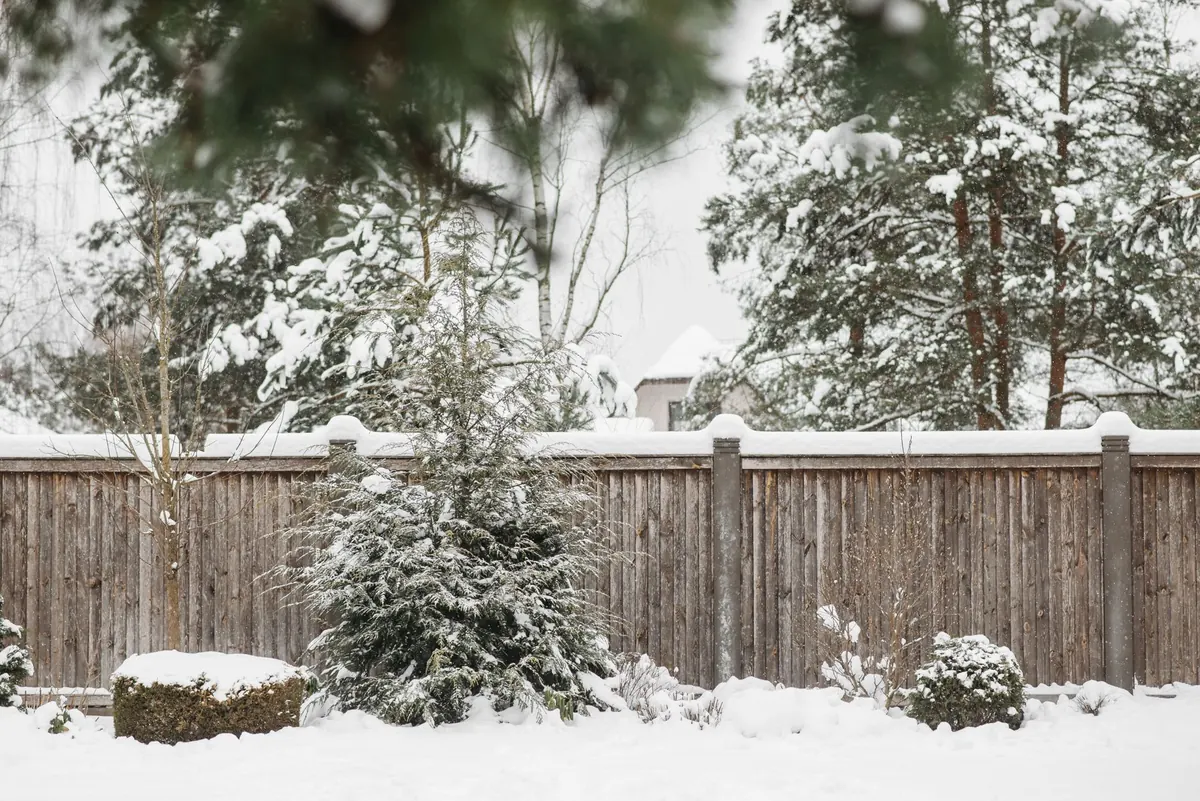
Durability hinges on species and treatment. Pressure-treated softwood — often sold as tanalised — is the standard choice, and the treatment is only as deep as the incising and penetration allow. Where you can get it, naturally durable timber such as oak, sweet chestnut or larch resists rot without chemicals, but it costs more and is harder to find in post sizes.
Three habits that shorten a timber post's life
- Cutting the post and leaving a fresh, untreated end in the ground. Treat every cut end with a brush-on preservative.
- Setting it straight into soil with no concrete collar. The post moves, water gathers, and the base stays wet.
- Buying the cheapest post available for a gate or a windy corner, where the load is highest.
Concrete posts: no rot, plenty of weight
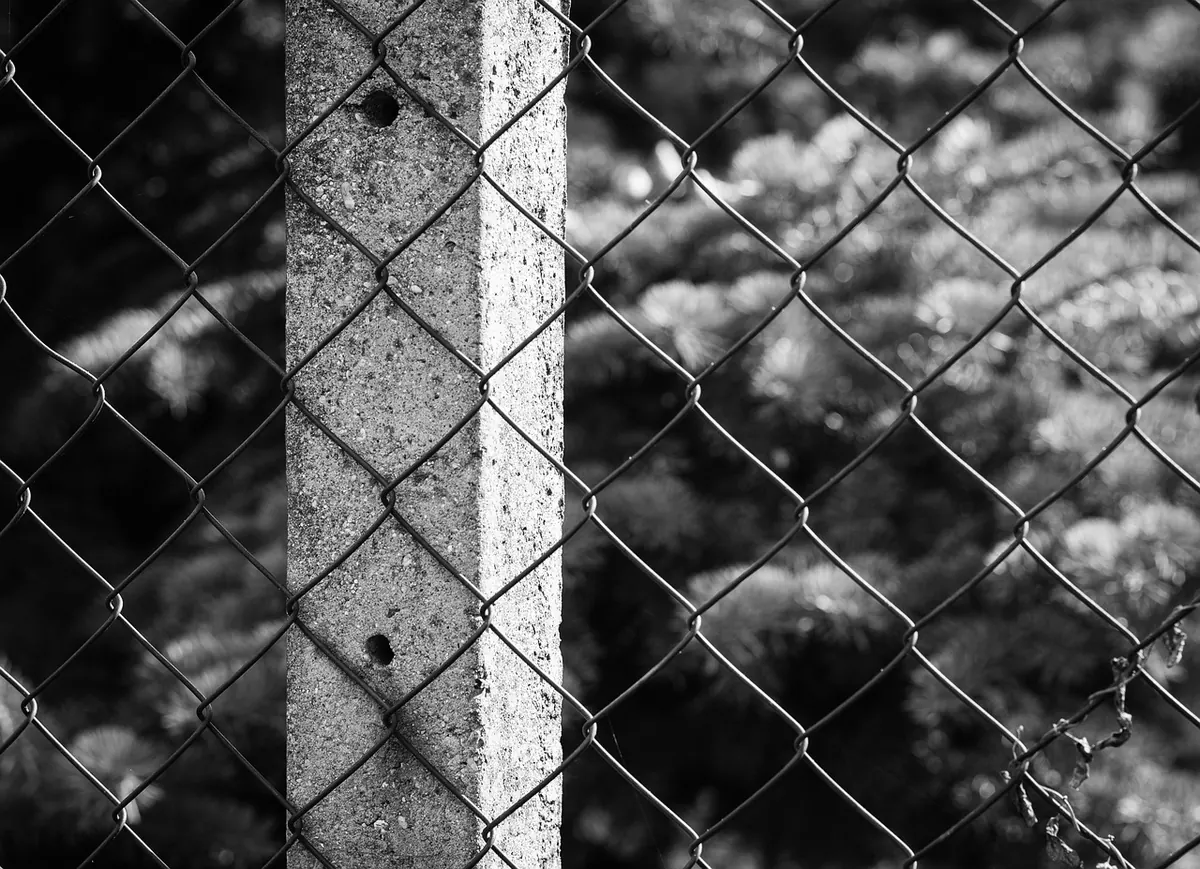
Reinforced concrete cannot rot, won't be eaten by insects, and doesn't care how wet your clay is. Slotted concrete posts paired with panels make a neat, long-lived system, and they hold their line better than timber over a long run.
The downsides are weight and cracking. A concrete post is awkward to lift and almost impossible to handle one-handed, so budget for two people or a helper with a barrow. Poorly made posts, or ones with too little cover over the steel reinforcement, can spall and crack — particularly through repeated freeze-thaw cycles or in coastal salt spray, where the reinforcement corrodes and forces the concrete apart from the inside. You also can't cut, drill or plane a concrete post to fit an awkward gap, and fixings need proper masonry anchors rather than a wood screw.
Metal posts: slim, strong, and let down by their coating
Galvanised steel posts and slotted steel systems are tidy, straight and take up far less room in the ground than a chunky timber or concrete post. They don't rot, and some can be driven rather than concreted in. Two things cause them to fail: a thin wall and a damaged coating.
A cheap tubular post with a very thin wall dents easily and can eventually perforate. Heavier box section holds up far better. Rust appears first at cut ends, drilled holes, scratch marks and the groundline. Hot-dip galvanised steel with a powder coat on top is the most durable common specification; thin electroplated zinc or bare steel with a "rust-proof" label will not last. If you cut or drill steel, touch in the exposed metal with a zinc-rich repair paint.
Durability, cost and effort compared
- Upfront cost: timber is generally cheapest per post; steel varies enormously with gauge and coating; concrete carries the highest material cost and usually the highest delivery cost.
- Expected life: the widest spread of the three. Treated softwood in wet clay can be giving up after a decade or so, while a well-installed concrete or heavy galvanised post is often still solid decades later — provided it isn't cracked, rusted through or reversed into.
- Installation effort: timber is easiest to handle, cut and fix. Steel is light but needs precise alignment. Concrete is heaviest and least forgiving of a hole that's in the wrong place.
- Repair: swapping a single rotten timber post in a run is straightforward — cut the fixings, dig out, replace. Doing the same with a concrete post in a panel system is harder but doable. Timber wins here.
- Coastal and exposed sites: salt spray accelerates rust on steel, and freeze-thaw is unkind to concrete. On an exposed west coast site, timber, concrete or a heavily galvanised steel post will all outperform a thin-coated one.
Getting the post in the ground properly
- Dig deeper than you think. Aim for at least 600mm for a standard garden post, more for gate posts and windy, exposed sites.
- Make the hole wider than the post — roughly three times its width — so the concrete forms a collar the post can't lean in.
- Put a little hardcore or gravel in the bottom of the hole on heavy clay, so water drains away rather than pooling under the base.
- Set your line and levels with a string line before anything goes in. Check diagonals if you're building a run.
- Concrete the post in, working the mix down the sides to avoid air pockets. A rapid-setting post mix is convenient and strong enough for domestic fencing.
- Dome the top of the concrete and slope it away from the post. This one detail does more for post life than any upgrade in material.
- Brace the post and leave it alone. Don't hang a gate or lean panels against it the same day.
Post spikes and driving are quick alternatives on free-draining ground, and they suit steel and some timber. They're a poor fit for heavy clay, where the post will work loose as the ground swells and shrinks.
Which one should you buy?
For an ordinary garden fence on a tight budget, treated timber, concreted in with the cut ends treated, is a sensible, repairable choice — you'll replace the odd post over the years rather than the whole run. If you want to set it and forget it, particularly along a boundary in a windy spot, concrete or heavy galvanised steel will outlast timber comfortably. On the coast, skip thin-coated steel entirely; timber and concrete both weather better, and if you do choose steel, insist on hot-dip galvanising and a decent wall thickness.
Gate posts deserve over-engineering whatever the material. A gate hangs, swings and gets leaned on, so go deeper, use a stronger post and concrete it generously. It's also worth buying one spare post of the same type and stashing it in the shed; matching a post in five years' time is far easier when you already own it.
One last thing: if the fence sits on a boundary you share and you're unsure who is responsible for maintaining it, check your title deeds or ask a solicitor before you spend money on materials. Being clear on that point first is cheaper than an argument later.
Photo: Maaark / Pixabay